From early times, textiles have been used to cover the human body and protect it from the elements; to send social cues to other people; to store, secure, and protect possessions; and to soften, insulate, and decorate living spaces and surfaces.
The persistence of ancient textile arts and functions, and their elaboration for decorative effect, can be seen in a Jacobean era portrait of Henry Frederick, Prince of Wales by Robert Peake the Elder (above). The prince's capotain hat is made of felt using the most basic of textile techniques. His clothing is made of woven cloth, richly embroidered in silk, and his stockings are knitted. He stands on an oriental rug of wool which softens and warms the floor, and heavy curtains both decorate the room and block cold drafts from the window. Goldwork embroidery on the tablecloth and curtains proclaim the status of the home's owner, in the same way that the felted fur hat, sheer linen shirt trimmed with reticella lace, and opulent embroidery on the prince's clothes proclaim his social position.
Functions
Concepts
The word textile is from Latin texere which means "to weave", "to braid" or "to construct". The simplest textile art is felting, in which animal fibers are matted together using heat and moisture. Most textile arts begin with twisting or spinning and plying fibers to make yarn (called thread when it is very fine and rope when it is very heavy). The yarn is then knotted, looped, braided, or woven to make flexible fabric or cloth, and cloth can be used to make clothing and soft furnishings. All of these items – felt, yarn, fabric, and finished objects – are collectively referred to as textiles.
The textile arts also include those techniques which are used to embellish or decorate textiles – dyeing and printing to add color and pattern; embroidery and other types of needlework; tablet weaving; and lace-making. Construction methods such as sewing, knitting, crochet, and tailoring, as well as the tools and techniques employed (looms, sewing needles, and pleating) and the objects made (carpets, coverlets) all fall under the category of textile arts.
Textile arts
Textile arts are those arts and crafts that use plant, animal, or synthetic fibers to construct practical or decorative objects.
Textiles have been a fundamental part of human life since the beginning of civilization, and the methods and materials used to make them have expanded enormously, while the functions of textiles have remained the same. The history of textile arts is also the history of international trade. Tyrian purple dye was an important trade good in the ancient Mediterranean. The Silk Road brought Chinese silk to India, Africa, and Europe. Tastes for imported luxury fabrics led to sumptuary laws during the Middle Ages and Renaissance. The industrial revolution was a revolution of textiles technology: the cotton gin, the spinning jenny, and the power loom mechanized production and led to the Luddite rebellion.
Museum of Domestic Design and Architecture

The Museum of Domestic Design and Architecture (MoDA) is a museum in North London, England, housing one of the most comprehensive collections of 19th- and 20th-century decorative arts for the home.
The collections include the Silver Studio collection of wallpapers and home textiles and the Crown Wallpaper Archive among others.
The museum also runs a number of design workshops throughout the year.
The museum is part of Middlesex University and is located on the University's Cat Hill campus in the London Borough of Enfield.
Silver Studio
The studio, founded by Arthur Silver, designed some of the most famous fabric, wallpaper, carpet and metalwork designs for companies such as Liberty's, Turnbull and Stockdale, Sanderson and Warner and Sons Ltd, all of which used the Silver Studio's designs for their own ranges of wallpapers and textile.
In 1901 Silver's son Reginald (Rex) Silver took over the studio and ran it until 1963. At its most productive, the studio created more than 800 designs per year. The studio was renowned for its distinctive Art Nouveau style, although over the years they produced a wide variety of different designs and styles, including many of the famous "Liberty"-styles.
Fashion design
Fashion designers can work in a number of ways. Fashion designers may work full-time for one fashion company, known as in-house designers, which owns the designs. They may work alone or as part of a team. Freelance designers works for themselves, and sell their designs to fashion houses, directly to shops, or to clothing manufacturers. The garments bear the buyer's label. Some fashion designers set up their own labels, under which their designs are marketed.
Some fashion designers are self-employed and design for individual clients. Other high-fashion designers cater to specialty stores or high-fashion department stores. These designers create original garments, as well as those that follow established fashion trends. Most fashion designers, however, work for apparel manufacturers, creating designs of men’s, women’s, and children’s fashions for the mass market. Large designer brands which have a 'name' as their brand such as Calvin Klein, Ralph Lauren, or Chanel are likely to be designed by a team of individual designers under the direction of a designer
Featured article
Featured content in Wikipedia
Featured content represents the best that Wikipedia has to offer. These are the articles, pictures, and other contributions that showcase the polished result of the collaborative efforts that drive Wikipedia. All featured content undergoes a thorough review process to ensure that it meets the highest standards and can serve as an example of our end goals. A small bronze star (
Franco Scalamandré

Franco Scalamandre (born in Naples, Italy April 15, 1898, died March 4, 1988 at Plandome Manor, New York) was a co-founder of Scalamandré Inc. one of the United States' most prestigious manufacturers of traditional textiles, decorative textile trims, wall covering, and carpeting.
He was the son of Giuseppe Scalamandré and Maria Teresa Ambrosina Scalamandre. His father was a broker of silk, and a textile importer in Calabria.
Preparing the block
Woodblocks for textile printing may be made of box, lime, holly, sycamore, plane or pear wood, the latter three being most generally employed. They vary in size considerably, but must always be between two and three inches thick, otherwise they are liable to warping, which is additionally guarded against by backing the wood chosen with two or more pieces of cheaper wood, such as deal or pine. The several pieces or blocks are tongued and grooved to fit each other, and are then securely glued together, under pressure, into one solid block with the grain of each alternate piece running in a different direction.
The block, being planed quite smooth and perfectly flat, next has the design drawn upon, or transferred to it. This latter is effected by rubbing off, upon its flat surface, a tracing in lampblack and oil, of the outlines of the masses of the design. The portions to be left in relief are then tinted, between their outlines, an ammoniacal carmine or magenta, for the purpose of distinguishing them from those portions that have to be cut away. As a separate block is required for each distinct colour in the design, a separate tracing must be made of each and transferred (or put on as it a termed) to its own special blockWoodblock printing on textiles
Printing patterns on textiles is so closely related in its ornamental effects to other different methods of similar intention, such as by painting and by processes of dyeing and weaving, that it is almost impossible to determine from the picturesque indications afforded by ancient records and writings of pre-Christian, classical or even medieval times, how far, if at all, allusion is being made in them to this particular process. Hence its original invention must probably remain a matter of inference only. As a process, the employment of which has been immensely developed and modified in Europe in the nineteenth century by machinery anti the adoption of stereotypes and engraved metal plates, it is doubtless traceable to a primeval use of blocks of stone, wood, etc., so cut or carved as to make impressions on surfaces of any material; and where the existence of these can be traced in ancient civilizations, e.g. of China, Egypt and Asyaria, there is a probability that printing ornament upon textiles may have been practiced at a very early period. Nevertheless, highly skilled as the Chinese are, and for ages have been, in ornamental weaving and other branches of textile art, there seem to be no direct evidences of their having resorted so extensively to printing for the decoration of textiles as peoples in the East Indies, those, for instance, of the Punjab and Bombay, from whose posterity 16th century European and especially Dutch merchants bought goods for Occidental trade in Indiennes or printed and painted calicoes.
Textile printing
Textile printing is the process of applying colour to fabric in definite patterns or designs. In properly printed fabrics the colour is bonded with the fiber, so as to resist washing and friction. Textile printing is related to dyeing but, whereas in dyeing proper the whole fabric is uniformly covered with one colour, in printing one or more colours are applied to it in certain parts only, and in sharply defined patterns.
In printing, wooden blocks, stencils, engraved plates, rollers, or silkscreens are used to place colours on the fabric. Colourants used in printing contain dyes thickened to prevent the colour from spreading by capillary attraction beyond the limits of the pattern or design.
Digital Textile Design Melanie Bowles and Ceri Isaac

Textile designers are beginning to realize the creative potential of digital textile design and are fast catching up with graphic designers who have taken to working digitally. New digital textile-printing technology is enabling designers to work with an almost unlimited palette of colours to produce work of staggering detail in relatively short timescales.
Written specifically for textile designers, Digital Textile Design provides the know-how for students and professionals who wish to use Adobe Photoshop and Illustrator as design tools. A series of inspirational tutorials, presented in step-by-step format, guide the reader through the process of creating designs that will be suited to both the traditional textile production process, and to the new industry of digital printing onto fabric.
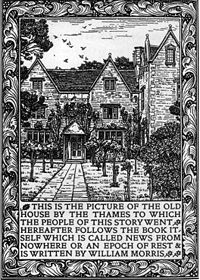
The Kelmscott Press
In January 1891, Morris founded the Kelmscott Press at Hammersmith, London, in order to produce books by traditional methods, using, as far as possible, the printing technology and typographical style of the fifteenth century. In this he was reflecting the tenets of the Arts and Crafts movement, and responding to the mechanization and mass-production of contemporary book-production methods and to the rise of lithography, particularly those lithographic prints designed to look like woodcuts. He designed two typefaces based on fifteenth-century models, the Roman "Golden" type (inspired by the type of the early Venetian printer Nicolaus Jenson) and the black letter "Troy" type; a third type, the "Chaucer" was an enlargement of the Troy type. He also designed floriated borders and initials for the books, drawing inspiration from incunabula and their woodcut illustrations.
Printed and woven textiles
Morris was producing repeating patterns for wallpaper as early as 1862, and some six years later he designed his first pattern specifically for fabric printing. As in so many other areas that interested him, Morris chose to work with the ancient technique of hand woodblock printing in preference to the roller printing which had almost completely replaced it for commercial uses.
Morris took up the practical art of dyeing as a necessary adjunct of his manufacturing business. He spent much of his time at Staffordshire dye works mastering the processes of that art and making experiments in the revival of old or discovery of new methods. One result of these experiments was to reinstate indigo dyeing as a practical industry and generally to renew the use of those vegetable dyes, like madder, which had been driven almost out of use by the anilines.
Printed and woven textiles
Morris took up the practical art of dyeing as a necessary adjunct of his manufacturing business. He spent much of his time at Staffordshire dye works mastering the processes of that art and making experiments in the revival of old or discovery of new methods. One result of these experiments was to reinstate indigo dyeing as a practical industry and generally to renew the use of those vegetable dyes, like madder, which had been driven almost out of use by the anilines.
Critical assessment

Henry Dearle's contributions to textile design were long overshadowed by the towering figure of William Morris. However, Dearle originally exhibited his designs under the Morris name rather than his own, especially in the Arts and Crafts Exhibitions and the major Morris retrospective of 1899, and even today many Dearle designs are popularly offered as "William Morris" patterns.
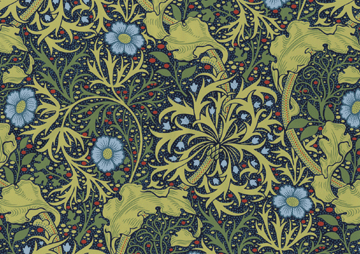
As late as 1981, the catalog of an exhibit of Morris & Co. textiles dismissed Dearle's style as "rarely more than a pastiche of his master's", citing as a source Lewis F. Day's assessment of 1905. But by 1989, textile historians had begun recognizing Dearle's talents as a designer. Linda Parry, a curator of textiles at the Victoria and Albert Museum, has suggested that the incorporation of Near and Middle Eastern designs in Morris & Co. textiles from the late 1880s may show the influence of Dearle's taste. Parry identifies Dearle's mature artistic voice from the 1890s in designs such as Seaweed wallpaper, Tulip woven fabric and Eden printed cotton, the latter reflecting Dearle's interest in Turkish and Persian textiles in the South Kensington Museum (now the Victoria and Albert).
Career
Henry Dearle began his career as an assistant in Morris & Co.'s retail showroom in Oxford Street in 1878, and then transferred to the company's glass painting workshop, where he worked mornings and studied design in the afternoons. Morris recognized Dearle's talents as a draftsman, and took him on as his tapestry apprentice. Morris had finished his first solo effort at tapestry in September 1879, and shortly thereafter Morris and Dearle set up a tapestry loom at Queen Square. Dearle executed Morris and Co.'s first figural tapestry from a design by Walter Crane in 1883. Dearle was soon responsible for the training of all tapestry apprentices in the workshop and partnered with Morris on designing details such as fabric patterns and floral backgrounds for tapestries based on figure drawings or cartoons by Burne-Jones (some of them repurposed from stained glass cartoons) and animal figures by Philip Webb.In the late 1880s, Dearle began designing repeating patterns for wallpapers and textiles, and it is likely that his designs for large-scale embroideries also date from around this time.
John Henry Dearle
John Henry Dearle or J. H. Dearle (1860-1932) was a British textile and stained glass designer trained by Pre-Raphaelite artist and craftsman William Morris. Dearle designed many of the later wallpapers and textiles released by Morris & Co., and contributed background and foliage patterns to tapestry designs featuring figures by Edward Burne-Jones and others. Beginning in his teens as a shop assistant and then design apprentice, Dearle rose to become Morris & Co.'s chief designer by 1890, creating designs for tapestries, embroidery, wallpapers, woven and printed textiles, stained glass, and carpets. Following Morris's death in 1896, Dearle was appointed Art Director of the firm, and became its principal stained glass designer on the death of Burne-Jones in 1898.
Critical assessment of Dearle's work underwent a significant change during the final decades of the twentieth century, recognizing Dearle's mature work as having a unique artistic vision of its own.
William Kilburn
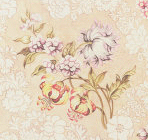
William Kilburn (1745-1818), was an illustrator for William Curtis' Flora Londinensis, as well as a leading designer and printer of calico. A few hundred originals of his water colour designs, make up the Kilburn Album, housed at the Victoria and Albert Museum in London.
William Kilburn was the son of a Dublin architect and was an apprentice to a calico printer, but spent his spare time engraving and sketching. He moved to Bermondsey after his father's death, and found living quarters near Curtis's nursery. Within a short while his skills were being used in the Flora Londinensis. He soon returned to calico printing, becoming financially successful.
Kilburn was the chief petitioner in March 1787, requesting Parliament for design copyright protection in the textile industry. At that time Kilburn was a calico printer at Wallington in Surrey. Ralph Yates, who was a London warehouseman, regularly sold Kilburn's designs to the firm of Peel & Co. in Bury in Lancashire, who would copy the design and produce a cheaper fabric that appeared in shops within a few days. Consequently the House of Commons proposed a Bill to control the plagiarism, a step meeting furious objections from Carlisle, Aberdeen, Manchester and Lancashire, who felt that their trade would collapse
Life and work
Anna Maria Garthwaite was the daughter of the Reverend Ephraim Garthwaite (1647-1719) of Grantham, Lincolnshire, who was rector of nearby Harston, Leicestershire, at the time of her birth, and his wife Rejoyce Hausted. Anna Maria left Grantham to live in York with her twice-widowed sister Mary from 1726 to 1728 They relocated to a house in Princes Street (now Princelet Street) in the silk-weaving district of Spitalfields east of the City of London in 1728, and Anna Maria created over 1000 designs for woven silks there over the next three decades. Some 874 of her original designs in watercolour from the 1720s through 1756 have survived and are now in the collection of the Victoria and Albert Museum. Many of these designs are dated and annotated with weaving instructions and the names of the weavers to whom they were sold.Garthwaite's work is closely associated with the mid-18th century fashion for flowered woven silks in the Roccoco style, with its new emphasis on asymmetrical structures and sinuous C- and S-curves. She adapted the points rentres technique developed by the French silk designer Jean Revel in the 1730s for representing near-three-dimensional floral patterns through careful shading.
Textile design
Overview
Successful textile designers marry a creative vision of what a finished textile will look like with a deep understanding of the technical aspects of productio and the properties of fiber, yarn, and dyes.
Designs for both woven and printed textiles often begin with a drawing or watercolor sketch of the finished design. Traditionally, drawings of woven textile patterns were translated onto special forms of graph paper called point papers which were used by the weavers in setting up their looms.
Today, most professional textile designers use some form of computer-aided designed software created expressly for this purpose.
Home Design Show & Interior Design Galleries

Need inspiration for decorating your home & garden?
At Look4Design you can easily navigate to view a wide variety of exhibitors in the area of home and interior design.
The products are shown using a unique technology which makes them easy to view.
There is a careful selection process of the companies which participate in this exhibition.
The exhibitors must comply with the highest quality design standards.